
The Brand Momentum Index has established itself as a benchmark for measuring brand influence in the country by evaluating three key dimensions: emotions generated , cultural relevance , and the ability to sustain growth in the medium and long term. Discussing the most influential Brazilian brands is essential for those working in business, marketing, and communication—understanding why they lead helps to design more effective strategies for brands of any size.
The most influential Brazilian brands in 2025
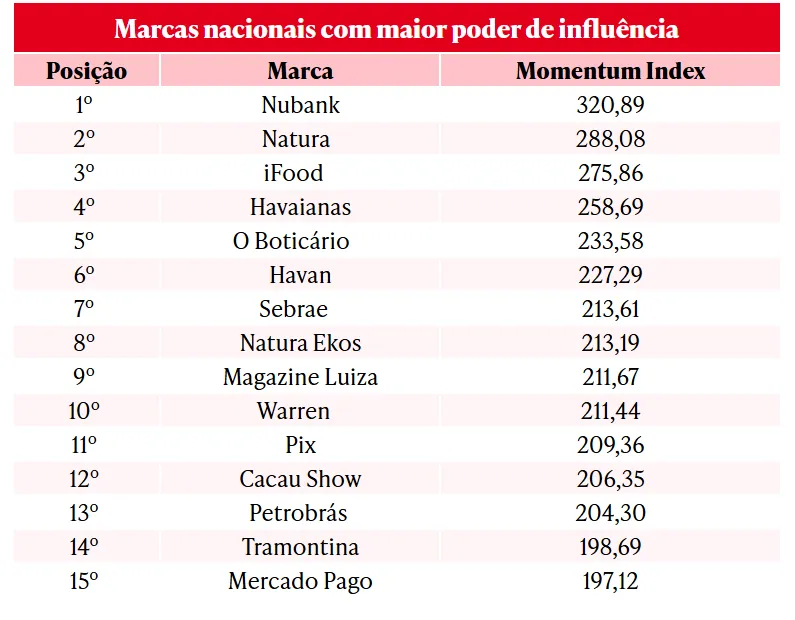
National highlights (Top 10): Nubank, Natura, iFood, Havaianas, O Boticário, Havan, Sebrae, Natura Ekos, Magazine Luiza, Warren.
Other Brazilian references: Pix, Cacau Show, Petrobrás, Tramontina, Mercado Pago.
What they have in common (4 recurring traits):
- Innovation applied to everyday life
Fintechs (Nubank, Mercado Pago, Pix) simplify payments; iFood redefines convenience; Havaianas and Tramontina evolve their portfolio and channels without losing their essence. - Proximity and human language
Natura, O Boticário, and Natura Ekos maintain consistent dialogue with communities and causes; Magazine Luiza and Sebrae invest in education, service, and useful content. - Scanning with scale
Smooth onboarding (Nubank/Warren), strong UX (retail and delivery apps), CRM and data for personalization, and efficient omnichannel across physical and digital platforms. - Clear purpose and cultural value
Brands that connect products to meaning (sustainability, entrepreneurship, Brazilianness) maintain top of mind and defend margins.
Numbers in perspective : the selection features 10 leading national brands + 5 additional Brazilian brands that reinforce sectoral breadth (financial services, beauty, mass consumption, retail and energy).
The most influential international brands in Brazil
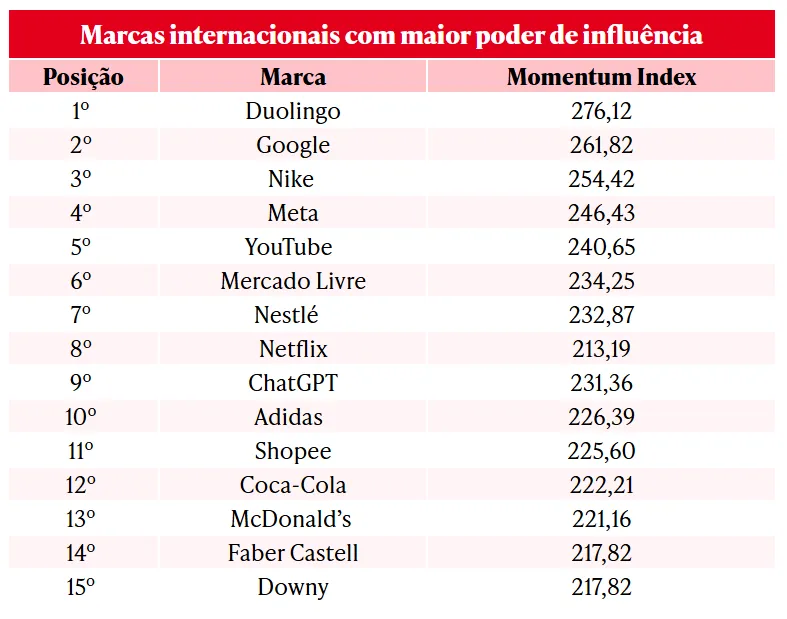
Global highlights: Duolingo, Google, Nike, Meta, YouTube, Mercado Libre, Nestlé, Netflix, ChatGPT, Adidas, Shopee, Coca-Cola, McDonald's, Faber-Castell, Downy.
Why they work here (3 critical factors):
- Local adaptation of product and message
Examples: Brazilian content and creators (Duolingo, Netflix, YouTube), seasonal promotions and territory activations (Coca-Cola, McDonald's), time-to-value in the app (Shopee). - Technology as a facilitator of habits
Google/YouTube as a “gateway” to the journey, ChatGPT and generative AI in decision support, social ads platforms (Meta) for performance. - Global culture translated into local codes
Nike/Adidas connect performance and lifestyle with national sports; Mercado Livre combines logistical convenience with a broad offering and Brazilian communication.
What makes a brand influential?
1) Emotional and cultural connection
Influential brands tell recognizable and consistent stories; they transform attributes (price, quality, convenience) into meaning.
2) Intergenerational relevance
They maintain codes that cross Generation Z, Millennials, and Gen X, adjusting language and channels without disrupting the core brand platform.
3) Innovation in product, communication and digital channels
Continuous testing (product, price, place, and promotion), disciplined growth, and UX improvement in web/app funnels.
4) Purpose and social responsibility
Verifiable commitments (environmental/social impact) and consistent practice — avoids green/purpose-washing and strengthens equity to long term.
Practical learnings for other companies
1. Value-driven branding (not just awareness)
Define value offer clear by audience/occasion. Measure brand “uplift” in business metrics (CAC/LTV, share, margin).
2. Digital experience that reduces friction
Onboarding in ≤ 3 steps, payment in 1–2 clicks, intelligent internal search, PDPs with social proof (reviews, real photos), transparent delivery SLA.
3. Content and Community
Native editorial calendar by channel (Reels/Shorts/TikTok), creators with cultural fit, ambassador programs, UGC curated.
4. Data to personalize without losing authenticity
Behavioral segmentation and “jobs to be done”; automated journeys (CRM/CDP) with privacy governance and frequency control.
5. Actionable Purpose
Choose 1–2 impact fronts (e.g., recycling, entrepreneurial training) with public goals, auditing, and transparent storytelling.
Example of local adaptation:
- Regional retail: seasonal kits + QR code for usage content/recipes; click-and-collect within 2 hours; loyalty program with cashback and gamified challenges.
- B2B Services: monthly “how-to” webinars, certification tracks and Customer Marketing (cases + customer committee) to reduce churn and increase expansion.
Branding and digital marketing trends in the Brazilian scenario
- Responsible AI on the journey: personalization and productivity with human curation, AI-generated content labeling, and satisfaction metrics.
- Real omnichannel: unified stock, cross-exchange policies, WhatsApp support with hand off human.
- Commerce + content: live shopping, video reviews and social checkout.
- Price with narrative: justify value with design, durability, service and impact.
- Ecosystem brands: expansion to services (subscriptions, clubs, credit/insurance) when applicable fit with trust built.
Conclusion: the future of brands in Brazil
The Brand Momentum Index analysis shows that the most influential Brazilian brands combine three pillars: emotion , culture , and sustainable growth . Influence doesn't depend solely on size or budget—it stems from genuine connection , superior experience , and consistency over time.
For rising brands, the path goes through:
- Clarity of positioning + impeccable execution at touchpoints.
- Data with empathy to personalize without losing authenticity.
- Purpose practiced and measured, not just communicated.
Those who translate these principles into product, service, and communication gain preference , increase LTV ( Lifetime Value), and strengthen cultural engagement—the influence that truly drives the market.