

The circular economy changes the way we develop and use resources. It replaces the traditional model with one that values reuse and recycling. According to the OECD, using materials for longer can reduce CO2 emissions by 33% 1.
In Brazil, only 4% of waste is recycled, but the potential is 30%. This means we lose R$ 14 billion per year 2.
Companies that care about the environment and society are more successful. They reduce environmental damage and become stronger. This is shown in studies on market opportunities.
The National Circular Economy Strategy (ENEC) helps in this change. It aligns with global plans, such as the 2030 Today Program, to certify sustainable practices 3 2.
Main points
- A circular economy can reduce 33% of product-related CO₂ emissions (OECD).
- Brazil recycles only 4% of its waste, with the potential to reach 30%.
- Annual losses of recyclable materials reach R$14 billion.
- Circular models generate green jobs and reduce operating costs.
- ENEC promotes efficient use of natural resources and environmental regeneration.
Fundamentals of Circular Economy and Sustainable Business
The circular economy changes the way we produce and consume. It replaces the idea of using and throwing away with a cycle that recycles. This system seeks to use resources more efficiently and promotes corporate sustainability . It aligns companies' actions with the well-being of the planet and the economy in the long term.
According to the Ellen MacArthur Foundation, a leader in the field, the circular economy uses intelligent design, reverse logistics , and innovation. This helps eliminate waste . <sup>4</sup>
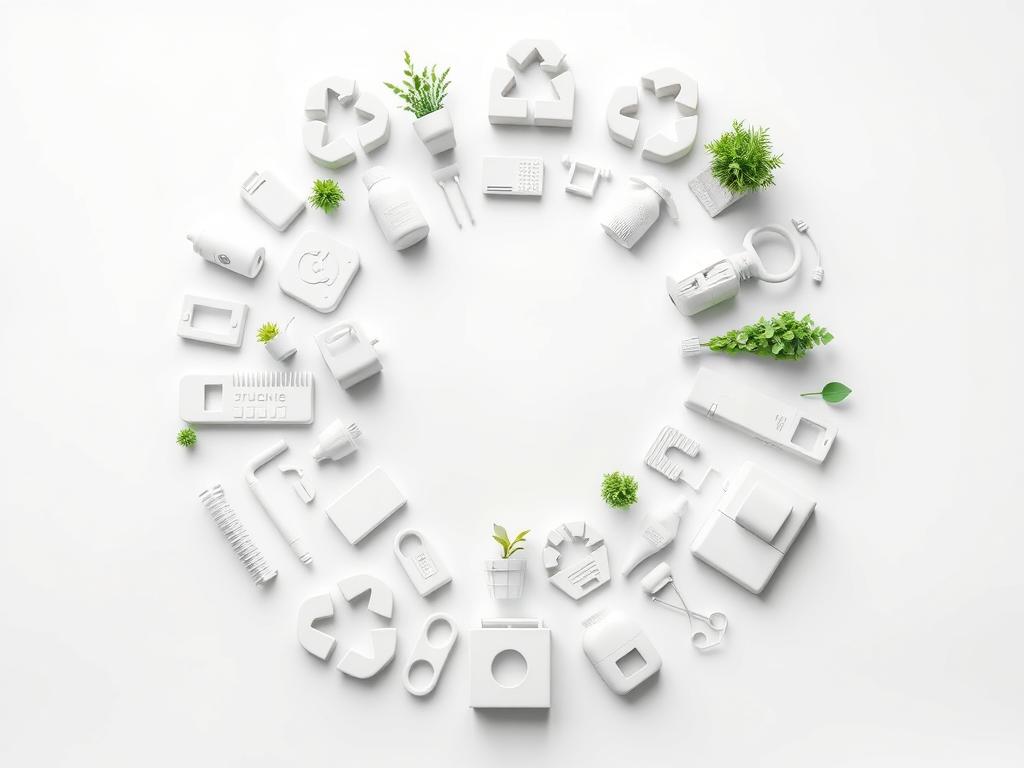
What is circular economy?
This economy is based on four pillars: efficient design, reuse, repair, and recycling. It differs from the linear economy , which only uses and discards. In this economy, materials are used multiple times, transforming waste into new resources.
Companies like Apeel demonstrate how it works. They use edible coatings to extend the shelf life of food, reducing losses by 50% 5.
Fundamental principles of corporate sustainability
- Operational efficiency: maximizing productivity with fewer resources, following standards such as the future ISO standard for circular economy4.
- Environmental regeneration: practices that restore ecosystems, such as returning nutrients to the soil4.
- Economic resilience: models that generate recurring revenue, such as product rental, reducing dependence on virgin raw materials5.
Differences between linear and circular economy
| Linear Economy | Circular Economy |
|---|---|
| Generates 60% of waste in global cities5 | Eliminates 100% of waste through design5 |
| Depends on non-renewable resources | Uses 90% fewer finite resources5 |
| Cumulative environmental impact | 40% reduction in industrial emissions5 |
Adopting the circular economy not only reduces regulatory risks but also creates great opportunities. Studies show that this economy could generate US$1,8 trillion by 2030. This directly impacts important sectors such as logistics and manufacturing . To better understand how to make this transition, sector analyses offer practical tips.
Market Opportunities in Brazil
The Brazilian market is fertile ground for businesses that adopt the circular economy . The Institute for Applied Economic Research (Ipea) shows that more than R$ 8 billion in recyclable materials are thrown away every year. This demonstrates a great potential for reusing these waste materials in production.
Companies like Patagonia and Philips are already doing this successfully. They reuse used products and offer maintenance services. This helps reduce operating costs by up to 30% 6.
" Reverse logistics and modular design are key strategies for transforming waste into revenue, especially in sectors such as packaging and electronics."
A recent study shows that 87% of Brazilian consumers want sustainable brands. And 70% are willing to pay up to 15% more for these products . This creates a large demand for sectors such as:
- Bioeconomy: development of bioplastics and natural fibers;
- Renewable energy: solutions for reusing organic waste;
- Regenerative agribusiness: techniques that restore soils and reduce emissions.
The adoption of circular models in Brazil is growing. This is linked to compliance with laws. The National Solid Waste Policy and Decree 10.936/2022 establish targets for reverse logistics . This creates a large market for waste management, estimated at R$ 12 billion by 2025 7.
Companies that use tracking technologies and partnerships with recycling cooperatives, such as Trashin, are able to increase efficiency by up to 40% 6.
The growth of these opportunities shows an important shift. 45% of large companies already have ESG goals to reduce waste. This helps attract investment.
Circular Business Models
In 2017, only 12% of companies worldwide had changed their business models to circular ones , according to Upcycle Brasil 8. This shows that there are opportunities to save money and stand out, especially in sectors such as manufacturing and retail. BASF, for example, created programs like Keep it Smart and Close the Loops in South America. It improved its production chains and recovered 89% of its industrial waste.
Circular design and product development
Circular design uses recyclable materials and facilitates disassembly, reducing environmental impact by 30% 9. Companies like Philips create modular products. The Ellen MacArthur Foundation says it is essential to work together to increase sustainability 9.
“Reverse logistics is not only a legal obligation, but it also helps a lot with efficiency. Companies that collect used packaging save up to 15% on raw materials.”
Reverse logistics and waste management
Reverse logistics faces challenges, but companies like Natura have overcome these obstacles. They reuse 70% of plastic bottles in new products 10. In the automotive sector, 92% of components in Europe are recycled, says Upcycle Brasil 8.
Sharing economy and circular services
- Car sharing platforms, such as Movida, reduce costs by 25%10.
- Models product as a service generate constant revenue and extend the useful life of equipment.
- Brazilian modular furniture startups grew 40% per year with durable goods rental.
To shift to circular business models , clear metrics are needed. 68% of SMEs that used circularity indicators improved energy efficiency 8. Partnerships between companies and institutions, such as the Ellen MacArthur Foundation, help to adopt sustainable practices 9.
Implementation of Sustainable Practices
Adopting sustainable practices requires planning and process integration. Companies like Natura and Hering are at the forefront, using reusable packaging and recycled raw materials 11. Technology and manufacturing are investing in innovations to reduce waste and make better use of resources 12.
Transition strategies to a circular model
It is essential to redesign production chains. Natura has created 100% recyclable packaging, and Hering uses 72% organic cotton in its collections 11. Dell recovers 85% of its electronic components for reuse 11. Brazilian startups offer tax incentives for sustainable companies 11.
Sustainable technologies and innovations
IoT and blockchain sensors help monitor energy consumption and track materials. Sage X3, an ERP system, improves inventory management, reducing waste by 30% 12. Vale uses technology to increase selective waste collection, benefiting 200 families 11.
Evaluation and monitoring metrics
To measure efficiency, it's important to have clear indicators. KPIs such as recycling rates and emission reductions are essential. Companies use enterprise management systems to track goals. See examples below:
| Company | Metric | Result (2024) |
|---|---|---|
| Vale (Recycle) | Selective collect | +40% in 7 municipalities11 |
| Nature | Reusable packaging | 90% recyclability11 |
| Sage X3 | Stock reduction | 25% less waste12 |
Strict environmental laws and the need for transparency require companies to show their progress annually. ESG reports are crucial for attracting investors and complying with the laws.
Conclusion
The circular economy is changing industry, making it more efficient and protecting the environment. Companies like Natura and Braskem show that this works. They use renewable materials and reverse logistics, cutting costs by up to 18% 13.
This model helps to use resources for longer, avoiding the extraction of 2,3 billion tons of raw materials every year in Brazil 13.
To be sustainable, a business needs to overcome many challenges. Lack of laws and technology to reuse materials limits progress. But the National Pact for Circular Economy seeks to change that, with the help of partnerships between government and companies 14.
Studies show that the circular economy could reduce CO₂ emissions by 45% by 2030. This would bring US$4,5 trillion to the economy.13 Digital tools, such as the BrasilPrev program , help companies measure their environmental impact.
For leaders, adopting the circular economy is not a trend, it is essential to compete. The combination of innovation in bio-based materials, favorable policies, and consumer education is crucial. This could create 12 million skilled jobs in Latin America by 2040 14.
FAQ
What is circular economy?
The circular economy seeks to use resources more efficiently. It aims to develop the country in a sustainable way. This means using more durable and recyclable materials.
This approach helps reduce waste and save energy, thus contributing to a greener future.
What are the fundamental principles of corporate sustainability?
Corporate sustainability is essential for a circular economy. It involves managing resources responsibly. It also includes reducing waste and improving production efficiency.
What are the differences between linear and circular economy?
The circular economy is based on reducing, reusing, repairing, and recycling. It encourages business models focused on services. This contrasts with the linear economy , which follows the "extract, produce, discard" model.
What are the market opportunities for the circular economy in Brazil?
Brazil has great potential for a circular economy. There is a high demand for sustainable products and services. Companies that adopt circular practices can save money and improve their image.
Furthermore, the circular economy creates new business and job opportunities.
What are the main circular business models?
Circular models include circular design , reverse logistics, and the sharing economy. Circular design focuses on creating durable and recyclable products. Reverse logistics takes care of recycling materials.
The sharing economy promotes the sharing of resources. This creates circular services.
How can companies implement sustainable practices?
Implementing sustainable practices is crucial for a circular economy. Companies must develop strategies to become circular. This includes investing in sustainable technologies.
It is also important to train employees and suppliers on sustainability. This way, they can monitor and evaluate their actions.