

Digital transformation is redefining the patterns of interaction between companies and customers , with artificial intelligence (AI) emerging as a central element in this revolution.
Organizations that implement AI solutions in customer relationship management are gaining measurable competitive advantages, including increased conversion rates and higher satisfaction scores.
Real-time behavioral data analysis allows companies to anticipate needs and create highly individualized customer journeys.
Main points
- AI is transforming the customer experience.
- Organizations that adopt AI gain competitive advantages.
- Data analysis enables personalization.
- Technology is redefining expectations.
- AI implementation is a new paradigm.
The Impact of Artificial Intelligence on Customer Experience
Customer experience is being transformed by artificial intelligence , offering innovative solutions that optimize and automate processes. This technology is changing the way companies interact with their consumers, providing a more personalized and efficient experience .
What is Artificial Intelligence in the Context of Customer Service
In the context of customer service , artificial intelligence represents a set of technologies that simulate human cognitive capabilities to process, analyze, and respond to customer interactions in an autonomous and adaptive manner. This allows companies to offer more efficient and personalized service .
Unlike conventional automated systems, AI- based solutions have the ability to learn continuously, refining their responses and strategies based on the analysis of patterns identified in previous interactions with customers.
How AI is Transforming Customer Interactions
Artificial intelligence technology is transforming customer interactions in several ways. Natural language processing (NLP) allows AI systems to understand contextual nuances, intentions, and sentiments expressed by customers, enabling more accurate and empathetic responses.
Furthermore, AI is enabling personalization at scale, where each customer receives individualized service without compromising operational efficiency. To learn more about how AI is being used in customer service , you can visit our article on conversational marketing and AI-driven interactions.
Companies that implement AI in customer service are seeing significantly improved metrics, including a 70% reduction in average problem resolution time and a 35% increase in customer satisfaction rates.
Top AI Applications for Enhanced Customer Experience with Artificial Intelligence
AI is transforming customer service with advanced, personalized applications, enabling businesses to deliver more efficient and satisfying experiences.

Chatbots and Virtual Assistants
AI-powered chatbots have become essential in customer service, processing natural language and enabling seamless, personalized interactions 24/7. They reduce the need for human intervention in first-level issues by up to 80%. Learn more about the AI revolution in customer service.
Personalized Recommendation Systems
AI-based recommendation systems analyze purchase histories and browsing behaviors to provide highly relevant suggestions, increasing conversion rates by an average of 35%. They are key to improving cross-selling and upselling opportunities.
Predictive and Behavioral Analysis
AI-powered predictive analytics anticipate customer needs, enabling businesses to offer proactive solutions and significantly reduce churn rates. This increases customer lifetime value.
Automation of Service Processes
Automating customer service processes goes beyond call routing, encompassing the automatic categorization of requests and the autonomous resolution of recurring cases. This frees up human resources for situations that require empathy and critical judgment. For more information on how to implement these solutions, visit our article on conversational marketing.
Personalization: The Heart of Customer Experience in the Age of AI
The AI era has brought with it the ability to personalize customer experiences in unprecedented ways. Personalization goes beyond content, extending to the user interface itself. Fitness apps like Fitbod use AI to create personalized dashboards that highlight the metrics most relevant to each individual user.
This not only improves the user experience but also significantly increases engagement and retention. AI is creating highly detailed customer profiles , enabling hyper-personalized service where each interaction is tailored to the customer's specific preferences and history.
Creating Dynamic Customer Profiles
The creation of dynamic customer profiles represents a significant evolution from traditional static models. This incorporates continuous analysis of behavior , preferences , and interaction patterns to generate a multidimensional and evolving understanding of each customer.
Real-Time Recommendations
Real-time recommendations go beyond simply suggesting similar products. They incorporate contextual factors such as location, device used, time of day, and recent browsing history to offer highly relevant suggestions at the exact moment of greatest receptiveness. For more information on how AI is transforming customer interactions, visit Salesforce.
Omnichannel Personalization
Omnichannel personalization represents the state of the art in customer experience, ensuring consistency and continuity in interactions regardless of the channel used. This allows conversations to be resumed exactly where they were interrupted in another channel. To learn more about omnichannel strategies, check out Omnichannel 2.0.
| Strategy | Benefit | Social Impact |
|---|---|---|
| Creating Dynamic Profiles | Deep customer understanding | Effective personalization |
| Real-Time Recommendations | Relevant suggestions | Increased sales |
| Omnichannel Personalization | Consistency in interactions | Enhanced Customer Experience |

Implementing AI into Your Customer Service Strategy
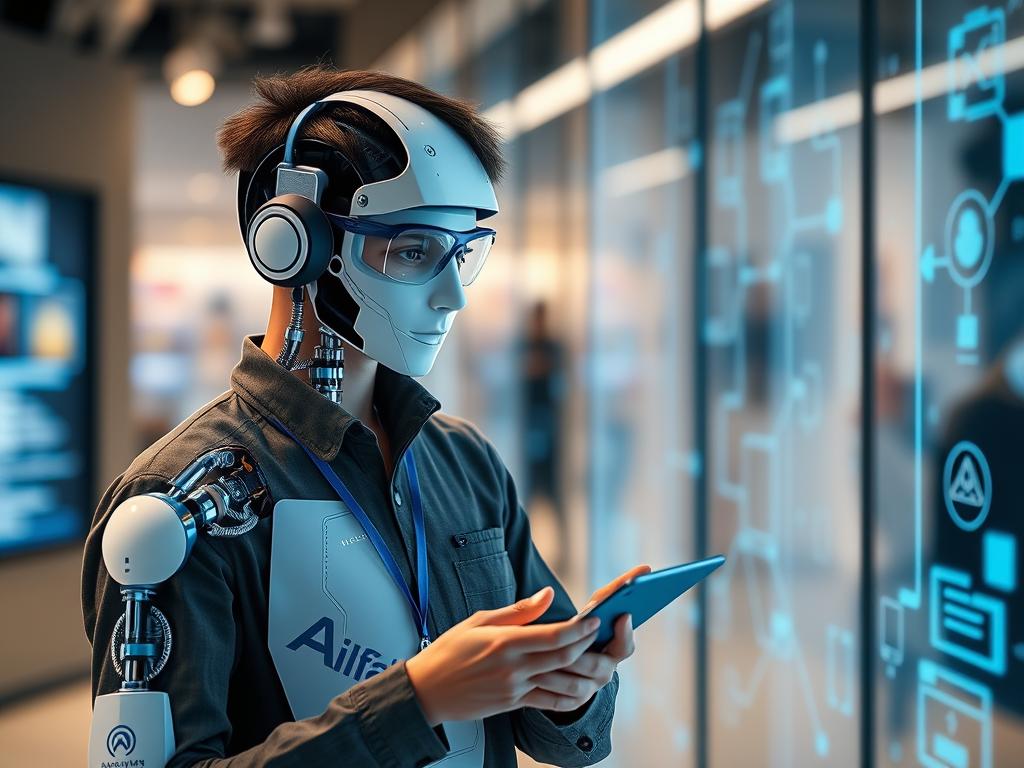
Implementing artificial intelligence (AI) in customer service strategy is a crucial step for companies seeking to improve customer experience and optimize their operations. Before investing in AI solutions, it is essential to define clear objectives.
Setting Clear Goals
It’s essential to ask yourself: What specific problems do I want to solve? How can AI improve customer experience or operational efficiency? What is the expected return on this investment? Having a clear vision of the objectives helps you choose the most appropriate tools and avoid unnecessary expenses.
Companies that define clear metrics to assess the impact of AI can demonstrate significantly higher ROI compared to implementations without well-defined goals.
Choosing the Right Tools
Not all AI solutions are created equal. Therefore, it is crucial to choose those that best suit your business needs and can be easily integrated into your sales and service platforms. When selecting the right tools, you should consider not only their technical features, but also their compatibility with your organizational culture.
Integrating AI with Existing Systems
Artificial intelligence can radically transform customer service, but its potential is only fully realized when seamlessly integrated with existing systems, such as CRMs and e-commerce platforms. This allows for a more cohesive and personalized customer experience.
Team Training and Adaptation
Training and adapting staff often represents the biggest challenge in implementing AI. It requires not only technical skills, but also a cultural shift that values collaboration between humans and intelligent systems. Leading companies are adopting a hybrid approach, where AI takes over both repetitive and analytical tasks.
To learn more about how to improve customer experience, visit our article on strategies for improving customer experience.
Competitive Advantages of AI in Customer Experience
Artificial intelligence is revolutionizing the customer experience, offering businesses significant competitive advantages. With the ability to process large volumes of data and learn from interactions, AI enables businesses to effectively personalize the customer experience.
Implementing AI in customer service brings several advantages, including improved operational efficiency, cost reduction and resource optimization, as well as 24/7 service with immediate response.
Improved Operational Efficiency
Automating repetitive, low-value-added tasks allows companies to process a significantly higher volume of customer interactions without a proportional increase in operating costs. This results in improved operational efficiency , allowing human resources to be allocated to more strategic, high-value tasks.
Cost Reduction and Resource Optimization
Market analyses indicate that implementing AI solutions in customer service can reduce operational costs by up to 30%, while increasing request processing capacity by more than 250%. This creates a substantial competitive advantage in terms of scalability and efficiency.
24/7 Support and Immediate Response
Automated customer service with immediate response eliminates one of the main sources of dissatisfaction for today’s customers: waiting times. This enables instant resolution of basic issues and efficient triage of complex cases, regardless of business hours or staff availability.
Data-Driven Insights for Decision Making
AI systems generate data-driven insights that go beyond simple retrospective analysis, offering predictive capabilities that allow companies to anticipate market trends and identify emerging opportunities. This aids in strategic decision-making and mitigating potential risks.
| Competitive advantage | Benefit | Social Impact |
|---|---|---|
| Improved Operational Efficiency | Automation of repetitive tasks | Productivity increase |
| Cost Reduction | Resource optimization | Reduction of operating costs |
| 24/7 service | Immediate response | Improved customer satisfaction |
| Data-Driven Insights | Predictive Analysis | Making informed decisions |
Companies that implement artificial intelligence in customer service report an average reduction of 40% in problem resolution time and a 35% increase in satisfaction rates. To learn more about how AI can be applied to sales strategies, visit our article on artificial intelligence in sales strategies.
Success Stories: Companies that Revolutionized Customer Experience with AI
Artificial intelligence is redefining the customer experience, as demonstrated by several successful companies. Many organizations, from large corporations to small businesses, are implementing AI solutions to improve customer engagement and stand out in the competitive marketplace.
Large Companies and Their AI Strategies
Large companies like Netflix and Amazon are using AI to personalize the customer experience in innovative ways. Netflix , for example, employs AI algorithms to recommend personalized content based on individual user preferences. Amazon, on the other hand, uses predictive algorithms to anticipate orders and improve logistical efficiency, drastically reducing delivery times.
Banco Bradesco, in turn, implemented the virtual assistant “BIA” (Bradesco Artificial Intelligence), which offers consistent service across multiple channels, maintaining the context of previous customer interactions. This approach not only improves the customer experience, but also increases operational efficiency.
| Company | AI Strategy | Result |
|---|---|---|
| Netflix | Personalized content recommendation | Increased customer satisfaction |
| Amazon | Predictive algorithms for logistics | Reduction in delivery times |
| Banco Bradesco | Virtual Assistant BIA | Improved customer service |
How Small Businesses Are Leveraging AI
Small businesses are also benefiting from AI technologies. Affordable AI tools are enabling these companies to offer personalized experiences and superior customer service, thereby competing with large corporations.
One example is the use of chatbots and recommendation systems that integrate with e-commerce platforms. This has resulted in significant increases in average order value and reductions in cart abandonment rates. Additionally, omnichannel personalization is becoming a reality for these businesses, improving the overall customer experience.

By adopting AI solutions, companies of all sizes can significantly improve customer experience, increasing loyalty and driving business growth.
Conclusion (161 words)
The integration of artificial intelligence is revolutionizing the way companies interact with their customers. This technological advancement is not merely an evolution in customer service but a fundamental transformation in how businesses understand and meet the needs and expectations of contemporary consumers.
By strategically implementing IA solutions, organizations are setting new market standards, compelling competitors to reassess their traditional approaches or face progressive obsolescence. The future of customer experience will be characterized by a seamless integration between artificial intelligence and human customer service.
For more insights on related trends, visit our article on CRM trends for 2025 no. As companies continue to adopt these technologies, those that hesitate will face growing competitive disadvantages. The true revolution brought about by artificial intelligence lies not just in operational efficiency or cost reduction but in creating genuine and relevant connections on a large scale, transforming transactional interactions into lasting relationships.
FAQ
How can Artificial Intelligence improve user experience?
AI improves the user experience by offering personalized support and immediate responses through chatbots and virtual assistants, as well as providing recommendations based on data analysis and customer behavior.
What are the main applications of AI in customer service?
Key applications include chatbots, personalized recommendation systems, predictive analytics, and process automation, which together improve efficiency and customer satisfaction.
How does personalization impact the customer experience?
Personalization creates a unique experience for each customer, increasing satisfaction and loyalty through relevant recommendations and targeted content.
What are the benefits of implementing AI in your customer service strategy?
Benefits include operational efficiency, cost reduction, 24/7 support, and data-driven insights to improve decision making.
How to choose the right AI tools for my business?
To choose the right tools, it is important to define clear objectives, assess business needs, and consider integration with existing systems.
What are the challenges of implementing AI in customer service?
Challenges include integrating AI with existing systems, training staff to use new technologies, and ensuring the quality of the data used.